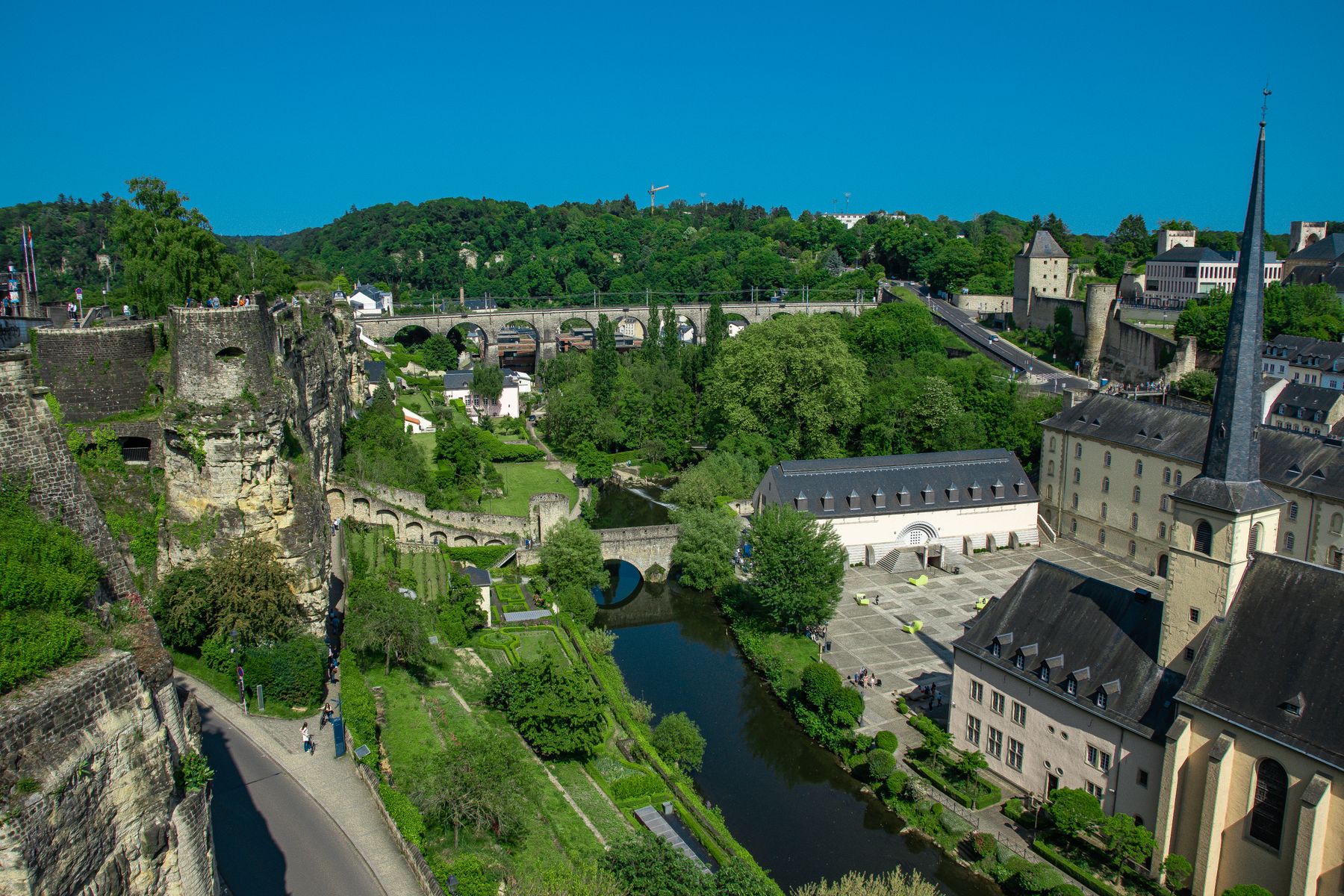
Start with the museums on Marché-aux-Poissons
The national history and art museums sit within a few minutes' walk of each other on Marché-aux-Poissons and Rue Wiltheim in the old town, and both are genuinely indoor days rather than an hour's shelter. The Musée national d'histoire et d'art covers Roman Luxembourg through to modern art across several floors, so it absorbs a wet morning without hurrying. Allow two to three hours, then cross to the Lëtzebuerg City Museum on Rue du Saint-Esprit, where the glass lift drops you through the rock to the Grund — a way of seeing the valley without standing in the wind.
Tuesday is the day to check before you commit: several state museums close on Mondays, so a Monday arrival is better spent in the Grund or on the Pfaffenthal panoramic lift, which is glazed and runs in all weather. Entrance to most national museums is free, which changes the calculation — you can dip in for ninety minutes and leave without feeling cheated. I would book a hotel in Ville Haute or Gare for this plan: Ville Haute puts you ten minutes on foot from all of it, and Gare gives you cheaper rooms plus the tram straight into the centre.
Covered markets, galleries and the Kirchberg option
If the rain sets in properly, the covered halls and shopping arcades around Grand-Rue and Rue Philippe II let you move between bookshops, cafés and the Galerie d'Art de la Ville without going outside for long. The Marché de Noël on Place d'Armes and in the Place Guillaume II runs through December and into early January, and its wooden chalets are close enough together that you can retreat into the surrounding streets when it turns. Late November to mid-December is the sweet spot: the lights are on, the crowds are thinner than the Christmas week itself, and hotel rates in Gare are noticeably softer than in high summer.
For something bigger, take tram T1 east to Kirchberg and the Mudam, the contemporary art museum in the old Fort Thüngen park. It is a fifteen-minute ride from Gare, the building itself is worth the trip, and the surrounding EU quarter has indoor cafés for a long lunch. The Philharmonie next door often has daytime rehearsals and family concerts; check its programme rather than turning up. Between a museum morning in the old town and a Kirchberg afternoon, I would pick the old town first — it is denser, and you walk less in the cold.
Eating, bathing and filling the late afternoon
Winter afternoons in Luxembourg get dark early, so plan the last two hours around food and warmth rather than another sight. The restaurants around Place d'Armes and Rue de la Loge serve Luxembourgish dishes such as judd mat gaardebounen and gromperekichelcher; expect a mid-range lunch to sit comfortably within a normal city-centre band, and book ahead for Friday and Saturday. For a quieter option, the Grund's riverside streets below the Chemin de la Corniche have smaller kitchens where a table is easier to find on a Tuesday.
If you are travelling with children, the indoor pool and spa complexes on the outskirts — the swimming centre at Kirchberg and the baths in Bonnevoie — swallow a wet afternoon without a long trip. Otherwise, the Pfaffenthal lift and the glass elevator in the City Museum give you the valley views that the Corniche walk would give you in summer, minus the wind. Book accommodation with a bath or a decent lounge: in January the useful hotel is the one you are happy to return to at four in the afternoon.
Getting around and choosing when to come
Luxembourg's trams, buses and trains are free to use within the country, which makes a Gare-based hotel far more practical than it looks: T1 runs from the station to the centre in about ten minutes, and the same ticket takes you to Kirchberg or out to Esch. From Findel airport, the bus into Gare takes around twenty minutes; a taxi is quicker but I would not budget for it on every leg when public transport costs nothing. The city is compact enough that a hotel anywhere between Gare and Ville Haute puts the old town within a fifteen- to twenty-minute walk.
January and February are the coldest and quietest months, with short daylight and a real chance of grey drizzle; December brings the markets and the crowds. If you want the markets without the crush, aim for the first week of December. If you want the lowest room rates and do not mind indoor-only days, late January is the better bet — and a hotel with breakfast included saves you a wet hunt for a café at eight in the morning. Skip the Corniche walk in January; save it for a return trip in May, when the same route takes half the time and twice the photographs.
Questions, answered
Are Luxembourg's national museums free to enter?
Most state-run museums in Luxembourg City, including the national history and art museum and the City Museum, are free or charge only for temporary exhibitions. Always check opening days before you travel, as several close on Mondays and hours shorten in winter.
What is the best month for the Luxembourg City Christmas markets?
The markets on Place d'Armes and Place Guillaume II generally run from late November into early January. The first week of December gives you the full lights and stalls with thinner crowds than the Christmas week itself, and hotel rates in Gare are softer then.
Where should I stay for a winter city break in Luxembourg?
Ville Haute puts you within ten minutes' walk of the main museums and the old town, while Gare offers lower rates and a ten-minute tram ride on T1. For cold-weather trips I would choose Gare with breakfast included and use the free public transport.
How do I get from Findel airport to the city centre?
Bus services connect Findel airport with the Gare district in roughly twenty minutes, and public transport within Luxembourg is free to use. A taxi is faster but costs money, so most travellers will find the bus perfectly practical for a city break.
Is Luxembourg City walkable in winter?
The centre is compact, with Ville Haute, the Grund and the station district linked by short walks, the T1 tram and the Pfaffenthal lift. The Chemin de la Corniche is exposed and slippery in wet weather, so save it for a milder season and use the glass lifts for valley views instead.
What can I do indoors with children on a rainy day?
The City Museum's glass lift through the rock is a hit, and the Mudam in Kirchberg has family-friendly exhibitions. Swimming centres in Kirchberg and Bonnevoie fill a wet afternoon, and the Philharmonie often runs family concerts — check its programme in advance.
How cold does it get in Luxembourg in January?
January is the coldest month, with temperatures often hovering around freezing and frequent grey drizzle, plus short daylight hours. Pack a waterproof layer and warm shoes, and plan indoor stops between short outdoor walks rather than long days outside.
Do I need to book restaurants in Luxembourg City in winter?
For Friday and Saturday evenings, yes — tables around Place d'Armes and Rue de la Loge fill quickly. Midweek is easier, and the smaller kitchens in the Grund are a good fallback. Book a day ahead for a group and you will avoid a cold walk between full restaurants.
Doing good is the business: every booking through Stay Luxembourg funds one verified tonne of carbon removal — same room, same price, no markup.
Start Your Search