Autumn Food in Luxembourg: What to Try and Where to Find It
From Bouneschlupp in village inns to game in the Müllerthal, here is where autumn eating in Luxembourg actually happens — and which neighbourhoods to book.
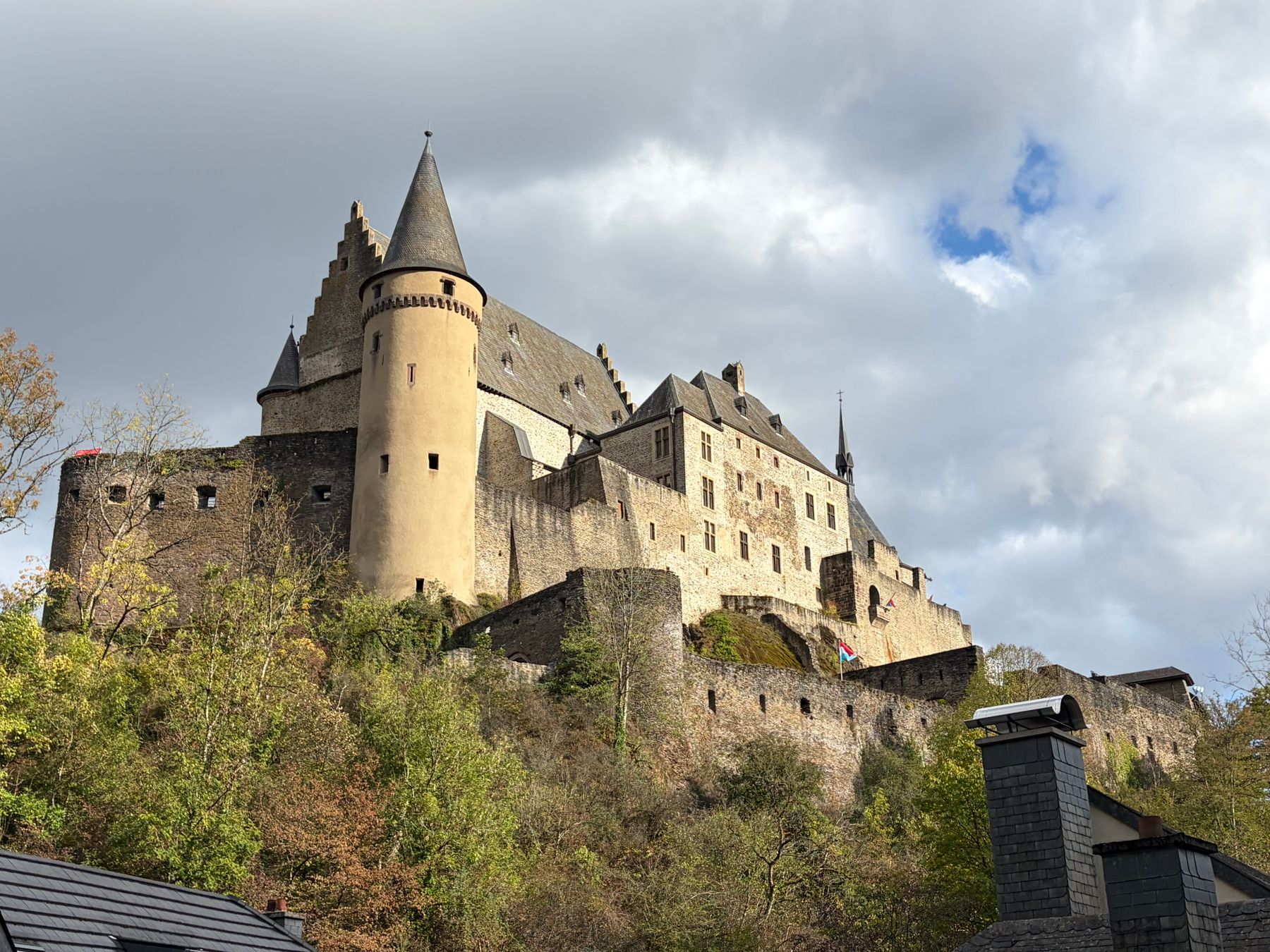
The dishes that define the season
Luxembourg's autumn table leans on orchards and woodland. Bouneschlupp — a green-bean and bacon soup with potatoes — appears on menus from late September, heartier than the summer version. Game is the real signal: civet de lièvre (hare stew) and sanglier (wild boar) with Spätzle or Kniddelen, thick flour dumplings. Look for Quetschentaart, a plum tart, in pâtisseries through October, and Äppelkuch (apple cake) once the orchards around Remich and Grevenmacher finish pressing. Moselle wines — Rivaner, Auxerrois, Pinot Blanc — are drunk young with these dishes; the crémant harvest runs September into October, and many vintners open their doors then.
Where to eat it depends on how far you will drive. In Luxembourg City, the Grund and Clausen quarter hold the densest cluster of traditional bistros within a ten-minute walk of each other, and the Marché-aux-Poissons area has several reliable kitchens. Outside the capital, village inns in the Éislek (the Ardennes north) and the Müllerthal serve game from local estates; the drive from the city to Echternach is about 40 minutes, and to Esch-sur-Sûre roughly an hour. Book a table for Friday and Saturday nights — autumn is game season and the good rooms fill.
Markets, fairs and the harvest calendar
The Place Guillaume II market in Luxembourg City runs Wednesday and Saturday mornings and is the easiest place to assemble a picnic: charcuterie from the Ardennes, Bergkäse-style mountain cheese, and seasonal fruit from the Moselle. In October, the smaller market at Place de Paris draws a local crowd. For something more specific, the Foire d'Automne at the Luxexpo halls in Kirchberg typically falls in late October or early November; check dates before you travel, since they shift. The Grevenmacher wine region holds open-cellars weekends during the harvest, usually in September; the tourist office in Grevenmacher can confirm which vintners participate.
Village fairs (Kirmes) run through September and October in towns such as Vianden, Clervaux and Diekirch, with food stalls and local produce — unpretentious and family-oriented. The Nuit du Vin in Remich, usually in September, is a ticketed tasting along the Moselle. If you are based in the city, use the free public transport: trams and buses reach the Kirchberg halls and the main station easily, and trains to Ettelbruck and Wasserbillig connect onward by bus. For the Moselle vintners, the drive from Luxembourg City to Remich is around 30 minutes on the N2.
Where to base yourself — and what to skip
For a first autumn trip, book in Luxembourg City's Ville Haute or Gare district. Ville Haute puts you within walking distance of the Grund bistros and the Saturday market; the Gare area is better value, with frequent trains and buses, and a short tram ride to the centre. If food is the main purpose, add one or two nights in Echternach, where guesthouses near the basilica give access to Müllerthal game kitchens and walking trails. Remich and Grevenmacher suit wine-focused stays; rooms are limited, so reserve early for harvest weekends. Expect city-centre hotels to cost more than the Gare district; outside the capital, guesthouses are generally cheaper.
Skip the hotel restaurants aimed at tour groups in the immediate vicinity of the Place d'Armes — the food is fine but you are paying for the postcard. Instead, walk ten minutes to the Rue de la Loge or into Clausen. In the Moselle, avoid the largest riverside terraces in favour of vintners' own tables, which are smaller and seasonal. Autumn weather is changeable — October averages around 10°C and rain is common — so pack a waterproof and confirm that any terrace-only venue has indoor seating. If you are travelling in the first week of November, note that many rural kitchens close for a short break.
Practical timing and booking
September and October are the best months: game is in season, the Moselle harvest is underway, and the city is not yet into Christmas-market pricing. Late October brings the Foire d'Automne, and the weather turns; November is quieter and some rural restaurants shut. Book accommodation two to three weeks ahead for harvest weekends, and reserve restaurant tables for Friday and Saturday. Public transport nationwide is free, which makes a car-free trip between the city, Echternach and the Moselle realistic if you plan around train and bus times; a car helps for village inns in the Éislek, where services thin out on Sundays.
For a hotel that supports this itinerary, I would choose a mid-range property in Ville Haute for the first two nights, then a guesthouse in Echternach for the Müllerthal. Search and book through a Luxembourg-based platform so your reservation is handled locally; check cancellation terms, since autumn weather can disrupt walking plans. If you are combining food with hiking, the Youth Hostel in Echternach is a practical budget option, while couples should look at small hotels in Remich for the wine weekends. Confirm opening days directly with any rural kitchen before you drive out.
Questions, answered
What is the single dish I should not leave Luxembourg without trying in autumn?
Civet de lièvre, hare stew with Kniddelen dumplings, served in traditional bistros in the Grund and Clausen from late September. It is the clearest taste of the season.
Do I need a car for autumn food trips?
No for the city, Echternach and the Moselle, thanks to free public transport. Yes for scattered village inns in the Éislek, where Sunday buses are limited.
When is the Moselle harvest, and can I visit vintners?
Usually September into early October. Several vintners in Remich and Grevenmacher open for tastings; confirm dates with the local tourist office before travelling.
Doing good is the business: every booking through Stay Luxembourg funds one verified tonne of carbon removal — same room, same price, no markup.
Start Your Search