A Food Lover's Weekend in Luxembourg City and the Moselle
How to eat your way from the capital's covered market to the Moselle's Riesling terraces in two or three days, with realistic drive times, neighbourhoods and what to skip.
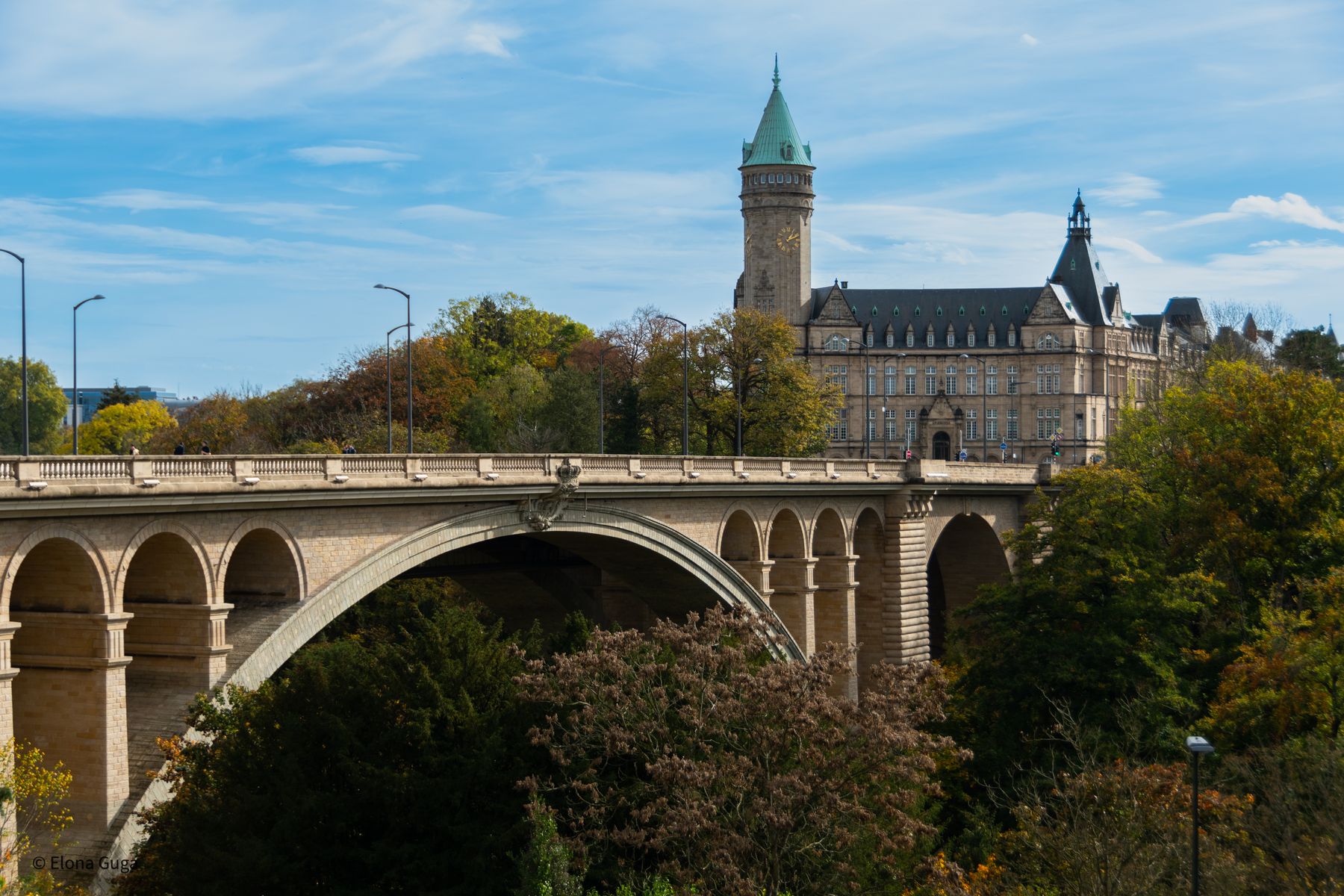
Day one in the capital: markets, butchers and the Grund
Start at the Marché Couvert in the Ville Haute, a short walk from Place d'Armes and the Hamilius tram stop. The food hall itself has a handful of stands — a Portuguese churrasco counter, a cheese stall, oysters in season — but the real Luxembourg move is the Saturday market spilling onto Place Guillaume II, where farmers sell Gromperekichelcher (potato fritters), fresh riesling and smoked trout from the Moselle. Arrive before 10am; by noon the best produce is gone and the crowds are thick. Weekday visits are quieter but pared back.
For lunch, cross the Pétrusse valley into the Grund via the lift from Plateau Saint-Esprit, and eat at one of the small brasseries along Rue de la Loge or Rue Large. Expect €15–22 for a plat du jour, more for the wine list. Book dinner at a two- or three-course spot in Clausen, the former brewery quarter near the Neudorf bridge, where the density of good tables is highest. Skip the chain restaurants along Avenue de la Gare in the Gare district — convenient, but not where a food trip should spend its budget.
Where to stay, and what to eat before leaving the city
You want a hotel in Ville Haute if you are here for two nights, ideally between Place d'Armes and the Adolphe Bridge — everything on foot, and the return tram from the station takes about 10 minutes. The Gare quarter is cheaper and has direct trains to the Moselle, but it is a business district after dark. If you plan to drive to the vineyards early on day two, a hotel with parking near the Glacis or Limpertsberg is the practical choice; city-centre parking garages such as Knuedler or Monterey charge by the hour and fill on Saturdays.
Before leaving the capital, eat a Bouneschlupp (green bean soup with bacon) or a Judd mat Gaardebounen (smoked pork with broad beans) at a traditional restaurant — the latter is heavy, so share or plan a light dinner. Buy a jar of Moutarde de Luxembourg or a bottle of crémant from a cellar door in the city if you are not driving. The Moselle is only 40 minutes away, so there is no need to rush: a late-morning departure still gets you to a vineyard tasting by noon.
The Moselle: Remich, Wormeldange and the wine route
The river road from Remich to Wormeldange and on to Grevenmacher is the spine of the Luxembourg wine route, and it is compact: Remich to Grevenmacher is about 20 km, 25 minutes by car. The Caves St Martin in Remich and the Domaines de la Ville de Luxembourg in Grevenmacher both run tastings; smaller family estates along the CR146 above Wormeldange will pour Riesling, Pinot Blanc and the sparkling crémant without an appointment on weekends. Call ahead for groups over six.
Eat lunch at a riverside terrace in Remich or Ehnen; the latter has a wine museum on the main street and a handful of cellar doors worth an hour. Expect €20–30 for a two-course lunch with a glass of local wine, and more for the tasting menus at the better-known estates in Grevenmacher. Book a hotel in Remich or Grevenmacher if you want to taste without driving; the train from Luxembourg City to Grevenmacher via Wasserbillig takes about 50 minutes, but Remich is bus-only from the capital, roughly 35 minutes. Outside July and August, many terraces close on Mondays and Tuesdays.
Practical timing, seasons and what to skip
The best months for this trip are May, June and September. The Moselle is at its greenest in late spring, the wine festivals cluster around August and early September (Grevenmacher's Fête du Raisin draws crowds), and autumn is for the grape harvest. July and August are busy with day-trippers from Luxembourg City and Trier, so book hotels and tastings a few weeks ahead. Winter is quiet — many estates shut, restaurants keep shorter hours, and the river road is grey; if you come anyway, base yourself in the capital and treat the Moselle as an optional half-day.
Skip the tourist-train loop in Remich and the souvenir shops on the main drag; spend the time on a cellar tour instead. In Luxembourg City, do not try to eat in the Gare quarter just because your train arrives there. And do not attempt the Moselle by public transport on a Sunday outside summer — buses are sparse and you will lose half a day waiting. Book a hotel in Ville Haute for the city nights and one in Remich or Grevenmacher for the river, and you will cover the food without wasting time in transit.
Hotels in Grevenmacher
Questions, answered
Do I need a car for the Moselle wine route?
A car is the most flexible option; Remich to Grevenmacher takes about 25 minutes and you can stop at estates along the CR146. Trains serve Grevenmacher via Wasserbillig, but Remich is bus-only from Luxembourg City, roughly 35 minutes. If you plan to taste, book a hotel in Remich or Grevenmacher and walk.
What should I eat in Luxembourg City that is genuinely local?
Look for Judd mat Gaardebounen (smoked pork with broad beans), Bouneschlupp (green bean soup), Gromperekichelcher (potato fritters) at the Saturday market on Place Guillaume II, and smoked trout from the Moselle. The Marché Couvert near Place d'Armes is a good starting point.
When is the best time to visit the Moselle for wine?
May, June and September are best: green vines, manageable crowds, and estates open for tastings. August and early September bring wine festivals, including Grevenmacher's Fête du Raisin, but book ahead. Outside July and August, many terraces close on Mondays and Tuesdays.
Where should I stay in Luxembourg City for a food-focused weekend?
Ville Haute, between Place d'Armes and the Adolphe Bridge, keeps restaurants and the Marché Couvert on foot. The Gare quarter is cheaper and has direct trains to the Moselle, but it is quiet at night. If driving to the vineyards early, choose a hotel with parking near the Glacis or Limpertsberg.
How much should I budget for restaurant meals?
A plat du jour in a city brasserie runs €15–22; a two-course lunch in Remich or Ehnen with a glass of local wine is €20–30. Dinners in Clausen and tasting menus at well-known Moselle estates cost more. These are typical ranges, not fixed prices — check menus on arrival.
Can I visit the Moselle without a car?
Yes, but plan carefully. Trains reach Grevenmacher via Wasserbillig (about 50 minutes from Luxembourg City); Remich is bus-only, roughly 35 minutes. On Sundays outside summer, buses are sparse. Staying overnight in Remich or Grevenmacher makes public transport workable.
How long does it take to drive from Luxembourg City to the Moselle?
About 40 minutes to Remich on the A3 and N2, and roughly 45 minutes to Grevenmacher. The river road between Remich and Grevenmacher is about 20 km, or 25 minutes. Allow extra time for vineyard stops along the CR146.
What should I skip on a food trip to Luxembourg?
Skip chain restaurants in the Gare quarter, the tourist train in Remich, and souvenir shops on the riverfront. Do not try to cover the Moselle by public transport on a Sunday outside summer, and avoid Mondays and Tuesdays for terraces outside July and August.
Doing good is the business: every booking through Stay Luxembourg funds one verified tonne of carbon removal — same room, same price, no markup.
Start Your Search